Top fish species at Skiffes Creek

App Section

Check which species have trophy potential in Skiffes Creek

Skiffes Creek fishing reports

Loading...

Striped bass

length · weight

Loading...

Skipjack tuna

length · weight

Loading...

Striped bass

length · weight

Loading...

White perch

length · weight

Loading...

Striped bass

length · weight

Loading...

length · weight

Fishbrain
More catches in the app...

Continue browsing catches and catch locations in the Fishbrain app

Loading...
Loading...
Loading...

General info

Skiffes Creek is a stream located in James City County, Virginia, United States. It is also intersecting with City of Newport News, Virginia. It is most popular for fishing Striped bass, Blue catfish, and Skipjack tuna.

Location

37°11′59.5″N 76°35′6.9″W
Directions

Amenities

When are Striped Bass biting on Skiffes Creek?

Learn what time of year and day to go fishing at Skiffes Creek. Download Fishbrain today to look for new fishing spots, scout new fishing access, or prep for your next trip.

Bite time image

Fishing regulations at Skiffes Creek, VA

Disclaimer: Always check local fishing regulations, water access rights and land ownership before fishing, regardless of any catches logged in that area by the Fishbrain community. Fishbrain has mapped millions of acres of government-owned land across the USA to help you identify potential fishing access, but you are responsible for ensuring compliance with all legal requirements.

Fishing regulations in Virginia can change throughout the year. Make sure to check this page before fishing for the most up to date rules and regulations for the current season. Local regulations govern when you can fish, the max size of the fish you can keep, how many fish you can keep, and more.

Regulations for top species
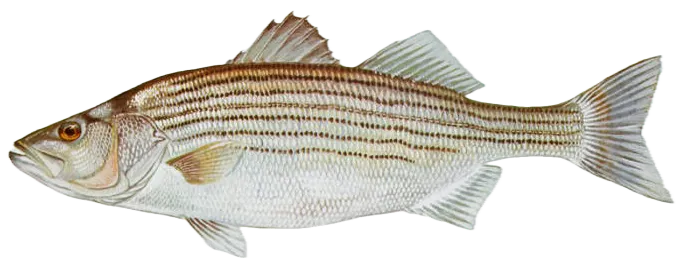
Season open: May 16 - April 30
Striped bass

Striped bass

Regulation boundaryVirginia State Waters
Bag limit1

The maximum number of individual fish legally harvested per harvester per day. Bag limits are only for properly licensed anglers actively harvesting the species. People who are not actively harvesting or are not properly licensed (if a license is required) may NOT be counted for the purpose of bag limits.

Min size28" (Total Length)

No person shall harvest any individual fish less than the minimum size limit.

Total length means the straight line distance from the most forward point of the head with the mouth closed, to the farthest tip of the tail with the tail compressed or squeezed, while the fish is lying on its side.

Max size31" (Total Length)

No person shall harvest any individual fish greater than the maximum size except as permitted.

Total length means the straight line distance from the most forward point of the head with the mouth closed, to the farthest tip of the tail with the tail compressed or squeezed, while the fish is lying on its side.

Restrictions & requirements

NJ No Gaff

It is prohibited for any person to gaff striped bass when fishing recreationally.

Additional information
Regulations provided here are for the Virginia Coastal Season. Buggs Island Lake/Kerr Reservoir including the Staunton (Roanoke) River and its tributaries to Leesville Dam and the Dan River and its tributaries to the Union Street Dam (Danville) October 1–May 31: 2 per day in the aggregate (combined) No striped bass or hybridstriped bass less than 20 inches or greater than 26 inchesJune 1–September 30: 4 per day in the aggregate (combined) No length limit Claytor Lake and its tributariesSeptember 16–June 30: 2 per day in the aggregate, no striped bass or hybrid bassless than 20 inchesJuly 1–September 15: 4 per day in the aggregate; no length limit Lake Gaston4 per day in the aggregate (combined)October 1–May 31: No striped bass or hybrid striped bass less than 20 inchesJune 1–September 30: No length limit Smith Mountain Lake and its tributaries, including the Roanoke River upstream to Niagara Dam 2 per day in the aggregate (combined)November 1–May 31: No striped bass 30 to 40 inchesJune 1–October 31: No length limit Striped bass in the Meherrin, Nottoway, Blackwater (Chowan Drainage), North Landing and Northwest rivers and their tributaries plus Back BayCREEL AND LENGTH LIMIT = No possessionGEOGRAPHIC EXCEPTIONS = None applyCREEL OR LENGTH LIMITS = None apply Anadromous (coastal) striped bass above the fall line in all coastal rivers of the Chesapeake Bay and Crane Lake (City of Suffolk)CREEL AND LENGTH LIMIT = Creel and length limits shall be as set by the Virginia Marine Resources Commission for recreational fishing in tidal watersGEOGRAPHIC EXCEPTIONS = None applyCREEL OR LENGTH LIMITS FOR EXCEPTIONS = None apply The Virginia Department of Wildlife Resources (VDWR) maintains a database of wildlife locations, including threatened and endangered species, trout streams, and anadromous fish waters that may contain information not documented in this letter. Their database may be accessed https://services.dwr.virginia.gov/fwis/ or contact Amy Martin at 804-367-2211 or amy.martin@dwr.virginia.gov.
Synonyms
Morone saxatilis
Season open: year-round
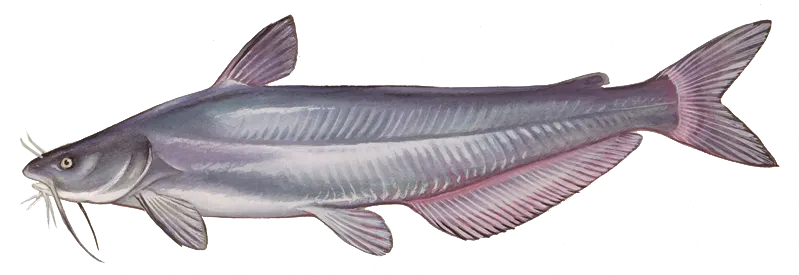
Blue catfish

Blue catfish

Regulation boundaryVirginia State Waters
Bag limit20

The maximum number of individual fish legally harvested per harvester per day. Bag limits are only for properly licensed anglers actively harvesting the species. People who are not actively harvesting or are not properly licensed (if a license is required) may NOT be counted for the purpose of bag limits.

Restrictions & requirements

VA Trotlines

Trotlines, juglines (noodles), or set poles (limb lines) may be used to take nongame fish and turtles provided they are not baited with live bait (worms are permissible), except on designated stocked trout waters, Department-owned lakes, and within 600 feet of any dam. Live bait other than game fish may be used on trot lines to take catfish in Carroll, Dickenson, Giles, Grayson, Montgomery, Pulaski and Wythe counties, and in the Clinch River in Russell, Scott, and Wise counties. Any person setting or possessing the above equipment shall have it clearly marked by permanent means with his or her name, address, and telephone number, and is required to check all lines and remove all fish and animals caught each day. All trotlines, juglines, or set poles must be removed from public waters when not in use.

Additional information
No statewide length limit.Exceptions to statewide limits:Buggs Island Lake/Kerr Reservoir including the Staunton (Roanoke) River and its tributaries to Difficult Creek, Charlotte County: 20 per day, except only 1 blue catfish per day longer than 32-inches total lengthDan River and its tributaries to the Banister River, Halifax County: 20 per day, except only 1 blue catfish per day longer than 32-inches total lengthJames River and its tributaries below the fall line: No daily limit, except only 1 blue catfish per day longer than 32 inchesRappahannock River and its tributaries below the fall line: No daily limit, except only 1 blue catfish per day longer than 32 inchesYork River and its tributaries (including the Pamunkey River and Mattaponi River) below the fall line: No daily limit, except only 1 blue catfish per day longer than 32 inchesLake Gaston: No daily limit, except only 1 blue catfish per day longer than 32 inchesSouth Holston Reservoir: 20 catfish per day, only 1 catfish per day longer than 34-inches total lengthAll rivers below the fall line other than the James River and its tributaries, the Rappahannock River and its tributaries, and the York River and its tributaries: No daily limitBow and Arrow (including crossbows) may be used to take common carp, grass carp, northern snakehead, and gar (fishing license required) during day and night hours, except from waters stocked with trout. Bowfin and catfish may be taken in tidal waters. Spearguns and poisoned arrows are prohibited.Any common carp, grass carp, northern snakehead, goldfish, catfish, longnose gar, or bowfin taken with bow and arrow must be retained and must not be released back into or disposed of into the water. These fishes may not be disposed of on property abutting the body of water of capture.For more information, see Virginia Department of Wildlife Resources.
Edibility
Very good
Synonyms
Ictalurus furcatus
Season open: year-round
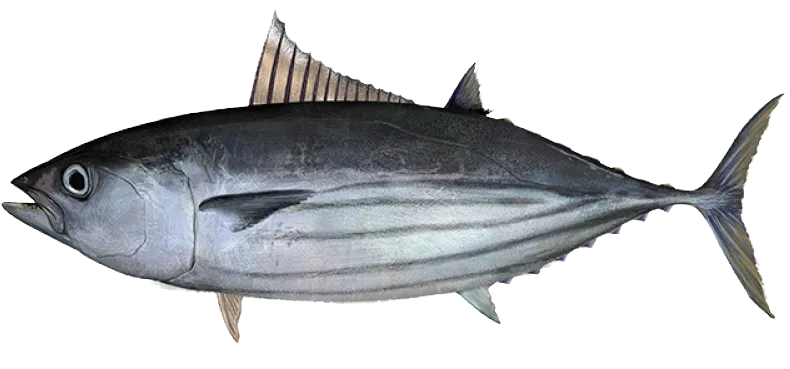
Skipjack tuna

Skipjack tuna

Regulation boundaryHighly Migratory Species
Special gear

HMS Tuna

Anglers with an HMS Angling permit may harvest Bigeye, Albacore, Yellowfin, Skipjack using handline, rod and reel, or speargun. Bluefin tuna may only be harvested using handline or rod and reel (no speargun).

Restrictions & requirements

Gigging

Harvest by gigging prohibited.

Snagging

Harvest of this species by snagging (snatch hooking) is prohibited.

Required licenses
Atlantic Highly Migratory Species Angling Permit
Additional information
All tunas must be landed with at least the tail and one pectoral fin attached. The upper and lower lobes of the tail may be removed for storage purposes as long as the fork of the tail remains intact. Any Atlantic tuna that is caught but not kept must be released immediately, without removing it from the water, to improve its chances of survival. Anglers must report all recreational tuna landings. Report all non-tournament recreational Atlantic tuna landings to NMFS within 24 hours by calling 1-800-894-5528 or hmspermits.noaa.gov. You must report recreational landings of tuna in North Carolina by calling 1-800-338-7804. You must report recreational landings of tuna in Maryland by calling 1-410-213-1531. All highly migratory species require an HMS Angling Permit from NOAA Fisheries. Permits are available by calling 1-888-872-8862, or by visiting hmspermits.noaa.gov. No sale permitted for HMS species caught under an HMS Angling Permit. For complete HMS regulations contact NOAA Fisheries HMS Management Division at 1-301-427-8503 or visit www.fisheries.noaa.gov/topic/atlantic-highly-migratory-species
Edibility
Very good Catch, Clean, Cook Skipjack Tuna by BlueGabe
Synonyms
Aku, Katsuwonus pelamis, Otaru
License Icon
Local laws and licenses

Virginia fishing license

Get license

Reviews of Skiffes Creek

4.0
Loading...

1 ratings

5
4
3
2
1
Top reviews

Cities nearby

Yorktown

4.6 miles away

Newport News

7.5 miles away

Williamsburg

8.3 miles away

Rushmere

9.8 miles away

Scotland

11.7 miles away

Poquoson

13.4 miles away

Surry

14.3 miles away

Gloucester Courthouse

14.6 miles away

Hampton

15.8 miles away

Benns Church

18.2 miles away

Carrollton

18.4 miles away

Claremont

21.1 miles away

Mathews

21.7 miles away

Dendron

21.8 miles away

Ivor

26.7 miles away

West Point

27.1 miles away

Portsmouth

27.5 miles away

Norfolk

27.7 miles away

Saluda

28.0 miles away

Deltaville

28.0 miles away

Charles City

28.4 miles away

Urbanna

30.4 miles away

Cape Charles

31.9 miles away

White Stone

32.5 miles away

Anything missing or inaccurate?

Suggest changes to improve what we show.

Suggest changes

FAQ about Skiffes Creek fishing

📍 Where is the Skiffes Creek located?
the Skiffes Creek is a stream located in James City County, Virginia, United States. It is also intersecting with City of Newport News, Virginia. Its coordinates are:
37°11′59.5″N 76°35′6.9″W
.
🎣 Where on the Skiffes Creek is it best to fish?
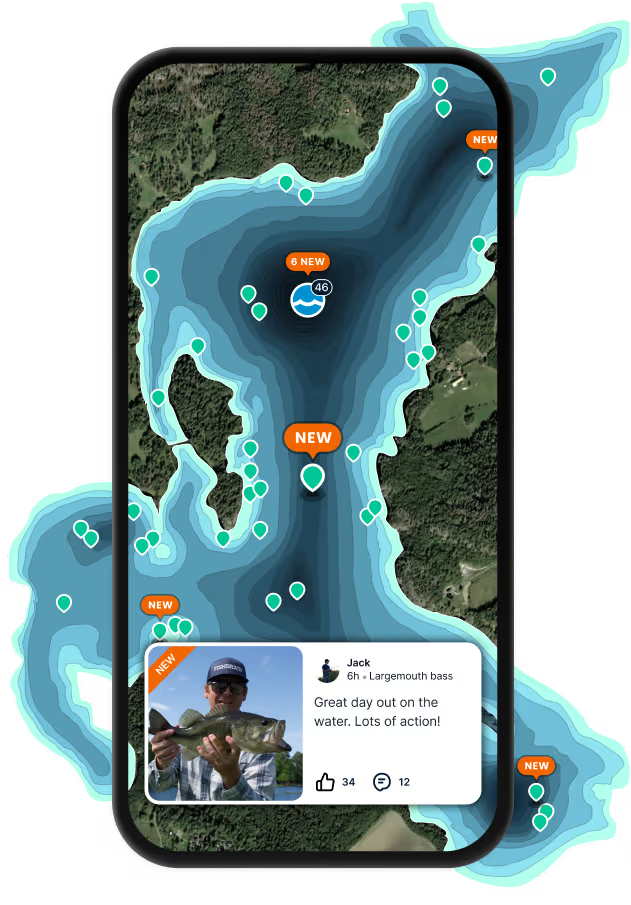
Find the best fishing spots on the Skiffes Creek by looking at where other anglers have caught fish. This can easily be done in the where it is also possible to see big fish potential and how good fishing is right now along with Garmin® depth maps.
🐟 What species are in the Skiffes Creek?
The most common species in the Skiffes Creek are:
📢 What are the latest Skiffes Creek fishing reports?
The latest Skiffes Creek fishing reports are:
🗓️ What species are in season at the Skiffes Creek right now?
According to fishing regulations at the Skiffes Creek, some of the species in season this November include: Striped bass, Spotted seatrout, Blacktip shark, Black sea bass, and Bonnethead shark. For full details on other species — including bag limits, minimum and maximum size limits, and seasonal closures — download the .
🪪 Do I need a fishing license to fish at the Skiffes Creek?

Fishing in Virginia requires a valid state fishing license for anglers. Licenses include resident and non-resident, annual, short-term, and combination options, available online or from licensed agents.

In Virginia, no fishing license is required for anglers under 16 or residents 65 and older. A few other exceptions worth knowing:

  • Free fishing days — most states designate 1–2 weekends a year where anyone can fish without a license

  • Tribal waters — tribal members fishing on tribal land operate under separate tribal regulations

  • Private ponds — landowners fishing their own water typically don't need a license

Non-residents usually pay more for a license than residents. Some species also require an extra stamp or endorsement on top of your base license.

Get license
App Section
Download Fishbrain and fish smarter
Unlimited access to the best fishing spot finder in the game. Get all the fishing intel you need to start catching more, and bigger, fish.

Free trial available

Loading...
Loading...
Loading...
Loading...