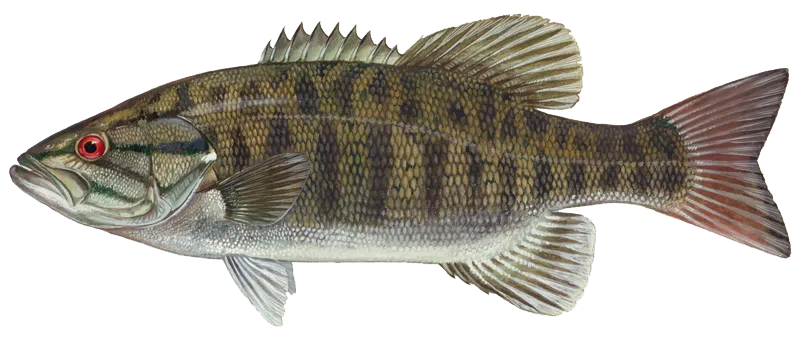
Largemouth Bass, Smallmouth Bass, Spotted Bass regulations for Lake ErieMarch 1 - April 30: bag limit = 5; min size = 14-inches May 1 - June 24: bag limit = 1; min size = 18-inches June 25 - April 30: bag limit = 5; min size = 14 inches
Largemouth Bass, Smallmouth Bass, Spotted Bass regulations for the Ohio River - Western Unit (Ohio/Kentucky) Regulations. These regulations apply only to boat anglers when fishing in Ohio waters, shoreline anglers when fishing on the Ohio shoreline, and all anglers in Ohio embayments and tributaries within the Western Unit. bag limit = 6; min size = 12 inches Kentucky regulations apply to boat anglers fishing beyond the 1792 low water mark, identified at wildohio.gov. WildOhio.gov.
Largemouth Bass, Smallmouth Bass, Spotted Bass regulations for the Ohio River - Eastern Unit (Ohio/West Virginia) Regulations. These regulations must be followed when fishing on or within a quarter mile of the Ohio River on its embayments and tributaries to the first riffle or dam in the Eastern Unit. bag limit = 6; min size = 12 inches West Virginia regulations apply to boat anglers fishing the main stem of the Ohio River, shore anglers fishing the West Virginia shoreline, and boat and shore anglers fishing West Virginia embayments and tributaries within the Eastern Unit.
Largemouth Bass and Smallmouth Bass regulations for Pymatuning Lake:bag limit = 5; min size = 12-inches
Additional site-specific regulations for Largemouth Bass, Smallmouth Bass, Spotted Bass in inland lakes, reservoirs, rivers, and streams:Action: bag limit = 4 fish split daily limit; 2 fish less than 15-inches and 2 fish 15-inches or longer Adams: bag limit = 5; min size = 15-inches All American Electric Power Company waters, including AEP ReCreation Lands: bag limit = 3 fish split daily limit; 2 fish less than 14-inches and 1 fish 20-inches or longer Appalachian Hills Wildlife Area: bag limit = 3 fish split daily limit; 2 fish less than 14-inches and 1 fish 20-inches or longer Belmont: bag limit = 3 fish split daily limit; 2 fish less than 14-inches and 1 fish 20-inches or longer Blue Rock: bag limit = 5; min size = 15-inches Burr Oak: bag limit = 5; none may be taken between 12 and 15-inches Caldwell: bag limit = 5; min size = 15-inches Cowan: bag limit = 5; min size = 15-inches Dale Walborn: bag limit = 5; min size = 15-inches Dow: bag limit = 5; none may be taken between 12 and 15-inches Findley: bag limit = 4 fish split daily limit; 2 fish less than 15-inches and 2 fish 15-inches or longer Fox: bag limit = 5; none may be taken between 12 and 15-inches Greenfield: bag limit = 5; min size = 15-inches Guilford: bag limit = 3 fish split daily limit; 2 fish less than 14-inches and 1 fish 20-inches or longer Hammertown (Jackson City Reservoir): bag limit = 5; none may be taken between 12 and 15-inches Hancock County Wetlands: bag limit = 5; min size = 15-inches Hargus: bag limit = 4 fish split daily limit; 2 fish less than 15-inches and 2 fish 15-inches or longer Highlandtown: bag limit = 4 fish split daily limit; 2 fish less than 15-inches and 2 fish 15-inches or longer Jesse Owens: bag limit = 3 fish split daily limit; 2 fish less than 14-inches and 1 fish 20-inches or longer Killdeer Plains ponds: bag limit = 3 fish split daily limit; 2 fish less than 14-inches and 1 fish 20-inches or longer Kiser: bag limit = 3 fish split daily limit; 2 fish less than 14-inches and 1 fish 20-inches or longer Knox: bag limit = 5; min size = 18-inches La Su An: special limits are posted Lake Rupert (Wellston City Reservoir): bag limit = 5; none may be taken between 12 and 15-inches Lake Snowden: bag limit = 4 fish split daily limit; 2 fish less than 15-inches and 2 fish 15-inches or longer Long: bag limit = 3 fish split daily limit; 2 fish less than 14-inches and 1 fish 20-inches or longer New Lyme: bag limit = 4 fish split daily limit; 2 fish less than 15-inches and 2 fish 15-inches or longer No. 30 and No. 33: bag limit = 3 fish split daily limit; 2 fish less than 14-inches and 1 fish 20-inches or longer Ohio-Erie Canal: bag limit = 5; min size = 15-inches Oxbow: bag limit = 3 fish split daily limit; 2 fish less than 14-inches and 1 fish 20-inches or longer Paint Creek: bag limit = 4 fish split daily limit; 2 fish less than 15-inches and 2 fish 15-inches or longer Pine: bag limit = 5; min size = 15-inches Resthaven Pond No. 8: bag limit = 5; min size = 15-inches Ross: bag limit = 5; min size = 15-inches Rush Runs: bag limit = 5; min size = 15-inches Salt Fork: bag limit = 4 fish split daily limit; 2 fish less than 15-inches and 2 fish 15-inches or longer Seneca: bag limit = 5; min size = 15-inches Silver Creek: bag limit = 4 fish split daily limit; 2 fish less than 15-inches and 2 fish 15-inches or longer Slope Creek (Barnesville No. 3): bag limit = 5; none may be taken between 12 and 15-inches Spencer: bag limit = 3 fish split daily limit; 2 fish less than 14-inches and 1 fish 20-inches or longer St. Joseph Wildlife Area: bag limit = 3 fish split daily limit; 2 fish less than 14-inches and 1 fish 20-inches or longer Turkey Creek: bag limit = 5; none may be taken between 12 and 15-inches Tycoon: bag limit = 3 fish split daily limit; 2 fish less than 14-inches and 1 fish 20-inches or longer Upper Sandusky No. 2: bag limit = 4 fish split daily limit; 2 fish less than 15-inches and 2 fish 15-inches or longer Wellington Reservoir South: bag limit = 5; min size = 15-inches Wingfoot: bag limit = 3 fish split daily limit; 2 fish less than 14-inches and 1 fish 20-inches or longer Wolf Run: bag limit = 3 fish split daily limit; 2 fish less than 14-inches and 1 fish 20-inches or longer Zepernick: bag limit = 5; min size = 15-inches