Top fish species at Miller Reservoir

App Section

Check which species have trophy potential in Miller Reservoir

Miller Reservoir fishing reports

Loading...

Black rockfish

length · weight

Loading...

Lingcod

1 in · 1 lb

Loading...

length · weight

Loading...

Steelhead

length · weight

Loading...

White sturgeon

length · weight

Loading...

Yelloweye rockfish

length · weight

Fishbrain
More catches in the app...

Continue browsing catches and catch locations in the Fishbrain app

Loading...
Loading...
Loading...

General info

Miller Reservoir is a water located in Coos County, Oregon, United States. It is most popular for fishing Lingcod, Albacore, and Chinook salmon.

Location

45°18′29.5″N 124°09′10.8″W
Directions

Fishing regulations at Miller Reservoir, OR

Disclaimer: Always check local fishing regulations, water access rights and land ownership before fishing, regardless of any catches logged in that area by the Fishbrain community. Fishbrain has mapped millions of acres of government-owned land across the USA to help you identify potential fishing access, but you are responsible for ensuring compliance with all legal requirements.

Fishing regulations in Oregon can change throughout the year. Make sure to check this page before fishing for the most up to date rules and regulations for the current season. Local regulations govern when you can fish, the max size of the fish you can keep, how many fish you can keep, and more.

Regulations for top species
Season open: year-round
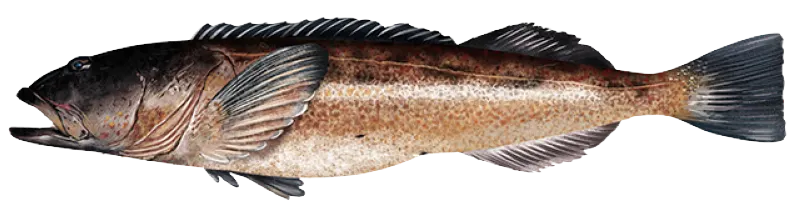
Lingcod

Lingcod

Regulation boundaryOR Oregon Marine Zone
Bag limit2

The maximum number of individual fish legally harvested per harvester per day. Bag limits are only for properly licensed anglers actively harvesting the species. People who are not actively harvesting or are not properly licensed (if a license is required) may NOT be counted for the purpose of bag limits.

Min size22" (Total Length)

No person shall harvest any individual fish less than the minimum size limit.

Total length means the straight line distance from the most forward point of the head with the mouth closed, to the farthest tip of the tail with the tail compressed or squeezed, while the fish is lying on its side.

Restrictions & requirements

OR Marine Allowed Methods

Species may be taken by angling, hand, bow and arrow, spear, gaff hook, snag hook and herring jigs. 

Additional information
Seasons are set after the regulations are published. Check regulations before fishing at http://myodfw.com/fishing/marine-zone Bag limit, season, and area regulations subject to change in-season. Check http://myodfw.com/fishing/marine-zone or call (541) 867-4741 before you fish. Any vessel fishing for, or possessing, groundfish (bottomfish) in the ocean must have a functional descending device onboard, and use on any rockfish released outside of 30 fathoms. For more information go to myodfw.com/articles/rockfish-recompression
Synonyms
Ophiodon elongatus
Location regulation notes
MARINE ZONE SEASONSFor the following fish, seasons are set after these regulations are established printed. Check regulations before fishing at https://myodfw.com/fishing/marine-zoneLingcod (including green-colored lingcod), Rockfish ("sea bass", "snapper"), Greenling ("sea trout"), Sablefish, Pacific Cod, Cabezon, Skates, Spiny Dogfish, Leopard Shark, Soupfin Shark, Flatfish (flounders, soles, sanddabs, turbots, and halibuts except Pacific halibut)  For the following fish, waters are open all year, 24 hours per day: Surfperch (includes all marine perch species), Herring, Anchovy, Sardine, Topsmelt, Jacksmelt, and true smelts, Offshore Pelagic Species: Includes all tuna and mackerel species, swordfish, billfish, jacks (family Carangidae), opah, dorado, pomfret, and all sharks except leopard shark, spiny dogfish, and soupfin shark, Striped Bass and/or Hybrid Bass, Sturgeon
Location specific information
MARINE ZONE SEASONSFor the following fish, seasons are set after these regulations are established printed. Check regulations before fishing at https://myodfw.com/fishing/marine-zoneLingcod (including green-colored lingcod), Rockfish ("sea bass", "snapper"), Greenling ("sea trout"), Sablefish, Pacific Cod, Cabezon, Skates, Spiny Dogfish, Leopard Shark, Soupfin Shark, Flatfish (flounders, soles, sanddabs, turbots, and halibuts except Pacific halibut)  For the following fish, waters are open all year, 24 hours per day: Surfperch (includes all marine perch species), Herring, Anchovy, Sardine, Topsmelt, Jacksmelt, and true smelts, Offshore Pelagic Species: Includes all tuna and mackerel species, swordfish, billfish, jacks (family Carangidae), opah, dorado, pomfret, and all sharks except leopard shark, spiny dogfish, and soupfin shark, Striped Bass and/or Hybrid Bass, SturgeonWhite shark, basking shark, mega-mouth shark, and oceanic whitetip shark are prohibited and must be immediately released unharmed. SEASONSLingcod (including green- colored lingcod), Rockfish ("sea bass", "snapper"), Greenling ("sea trout"), Sablefish, Pacific Cod, Cabezon, Skates, Spiny Dogfish, Leopard Shark, Soupfin Shark, Flatfish (flounders, soles, sanddabs, turbots, and halibuts except Pacific halibut) Seasons are set after these regulations are established printed. Check regulations before fishing at https://myodfw.com/fishing/marine-zone Surfperch (includes all marine perch species), Herring, Anchovy, Sardine, Topsmelt, Jacksmelt, and true smelts, Offshore Pelagic Species: Includes all tuna and mackerel species, swordfish, billfish, jacks (family Carangidae), opah, dorado, pomfret, and all sharks except leopard shark, spiny dogfish, and soupfin shark, Striped Bass and/or Hybrid Bass, SturgeonWaters open all year, 24 hours per day  Outside (seaward) of the 40-fathom regulatory line and using longleader gear Only species allowed include the following rockfish: yellowtail, widow, canary, blue, deacon, bocaccio, chilipepper, redstripe, greenstriped, and silvergray rockfish. For a 12 fish bag limit to apply, fishing must occur outside of the 40-fathom regulatory line & with longleader gear. No other rockfish or lingcod may be kept. For more info on what can be combined on the same trip, see myodfw.com/sport-bottomfish-seasons Anglers may keep one general marine fish daily bag limit of up to 5 fish on a bottomfish trip and do a separate offshore longleader trip on the same day, but fish must be offloaded in between trips and may total no more than 12 general marine species per day. Offshore longleader gear fishery trips cannot be combined with traditional bottomfish trips. Offshore longleader gear fishery trips can be combined with other non-bottomfish trip types (e.g., tuna or salmon), as long as the multi-species rule is followed, as well as any and all specific gear rules. Anglers are reminded that once salmon are on board, anglers are restricted to no more than 2 single point barbless hooks at all times when angling for salmon in the ocean or when angling for other species if a salmon has already been retained. The multi-species rule prohibits fishing for, or taking and retaining any species of salmon, Pacific halibut or marine fish while possessing on board any species not allowed to be taken in the area at that time. Note: if an angler retains more than the general marine fish bag limit of rockfish while participating in the longleader gear fishery, no other fishing (i.e., salmon) may occur inside (shoreward) of the 40-fathom regulatory line on that same trip.
Season open: year-round
Albacore

Albacore

Regulation boundaryOR Oregon Marine Zone
Aggregate limit25

The maximum number of individual fish across an aggregate group of species legally harvested per harvester per day.

Restrictions & requirements

OR Pelagic Species

Methods described below are only allowed when fishing outside of 3 miles from shore for offshore pelagic species. Only offshore pelagic species may be in possession, and any other species caught must be immediately released while using these methods. Chumming is allowed. Chum may be live, dead, or cut up squid, herring, sardine, anchovy, smelt, or Pacific mackerel. No restriction on the number of rods or lines fished per angler. It is unlawful to remove the fins or tail from a shark, except spiny dogfish, at any time. The fins and tail must remain attached and disposed of with the carcass.

Edibility
Very good
Synonyms
Ahi Palaha, Longfin tuna, Thunnus alalunga, Tombo
Location regulation notes
MARINE ZONE SEASONSFor the following fish, seasons are set after these regulations are established printed. Check regulations before fishing at https://myodfw.com/fishing/marine-zoneLingcod (including green-colored lingcod), Rockfish ("sea bass", "snapper"), Greenling ("sea trout"), Sablefish, Pacific Cod, Cabezon, Skates, Spiny Dogfish, Leopard Shark, Soupfin Shark, Flatfish (flounders, soles, sanddabs, turbots, and halibuts except Pacific halibut)  For the following fish, waters are open all year, 24 hours per day: Surfperch (includes all marine perch species), Herring, Anchovy, Sardine, Topsmelt, Jacksmelt, and true smelts, Offshore Pelagic Species: Includes all tuna and mackerel species, swordfish, billfish, jacks (family Carangidae), opah, dorado, pomfret, and all sharks except leopard shark, spiny dogfish, and soupfin shark, Striped Bass and/or Hybrid Bass, Sturgeon
Location specific information
MARINE ZONE SEASONSFor the following fish, seasons are set after these regulations are established printed. Check regulations before fishing at https://myodfw.com/fishing/marine-zoneLingcod (including green-colored lingcod), Rockfish ("sea bass", "snapper"), Greenling ("sea trout"), Sablefish, Pacific Cod, Cabezon, Skates, Spiny Dogfish, Leopard Shark, Soupfin Shark, Flatfish (flounders, soles, sanddabs, turbots, and halibuts except Pacific halibut)  For the following fish, waters are open all year, 24 hours per day: Surfperch (includes all marine perch species), Herring, Anchovy, Sardine, Topsmelt, Jacksmelt, and true smelts, Offshore Pelagic Species: Includes all tuna and mackerel species, swordfish, billfish, jacks (family Carangidae), opah, dorado, pomfret, and all sharks except leopard shark, spiny dogfish, and soupfin shark, Striped Bass and/or Hybrid Bass, SturgeonWhite shark, basking shark, mega-mouth shark, and oceanic whitetip shark are prohibited and must be immediately released unharmed. SEASONSLingcod (including green- colored lingcod), Rockfish ("sea bass", "snapper"), Greenling ("sea trout"), Sablefish, Pacific Cod, Cabezon, Skates, Spiny Dogfish, Leopard Shark, Soupfin Shark, Flatfish (flounders, soles, sanddabs, turbots, and halibuts except Pacific halibut) Seasons are set after these regulations are established printed. Check regulations before fishing at https://myodfw.com/fishing/marine-zone Surfperch (includes all marine perch species), Herring, Anchovy, Sardine, Topsmelt, Jacksmelt, and true smelts, Offshore Pelagic Species: Includes all tuna and mackerel species, swordfish, billfish, jacks (family Carangidae), opah, dorado, pomfret, and all sharks except leopard shark, spiny dogfish, and soupfin shark, Striped Bass and/or Hybrid Bass, SturgeonWaters open all year, 24 hours per day  Outside (seaward) of the 40-fathom regulatory line and using longleader gear Only species allowed include the following rockfish: yellowtail, widow, canary, blue, deacon, bocaccio, chilipepper, redstripe, greenstriped, and silvergray rockfish. For a 12 fish bag limit to apply, fishing must occur outside of the 40-fathom regulatory line & with longleader gear. No other rockfish or lingcod may be kept. For more info on what can be combined on the same trip, see myodfw.com/sport-bottomfish-seasons Anglers may keep one general marine fish daily bag limit of up to 5 fish on a bottomfish trip and do a separate offshore longleader trip on the same day, but fish must be offloaded in between trips and may total no more than 12 general marine species per day. Offshore longleader gear fishery trips cannot be combined with traditional bottomfish trips. Offshore longleader gear fishery trips can be combined with other non-bottomfish trip types (e.g., tuna or salmon), as long as the multi-species rule is followed, as well as any and all specific gear rules. Anglers are reminded that once salmon are on board, anglers are restricted to no more than 2 single point barbless hooks at all times when angling for salmon in the ocean or when angling for other species if a salmon has already been retained. The multi-species rule prohibits fishing for, or taking and retaining any species of salmon, Pacific halibut or marine fish while possessing on board any species not allowed to be taken in the area at that time. Note: if an angler retains more than the general marine fish bag limit of rockfish while participating in the longleader gear fishery, no other fishing (i.e., salmon) may occur inside (shoreward) of the 40-fathom regulatory line on that same trip.
Season open: year-round
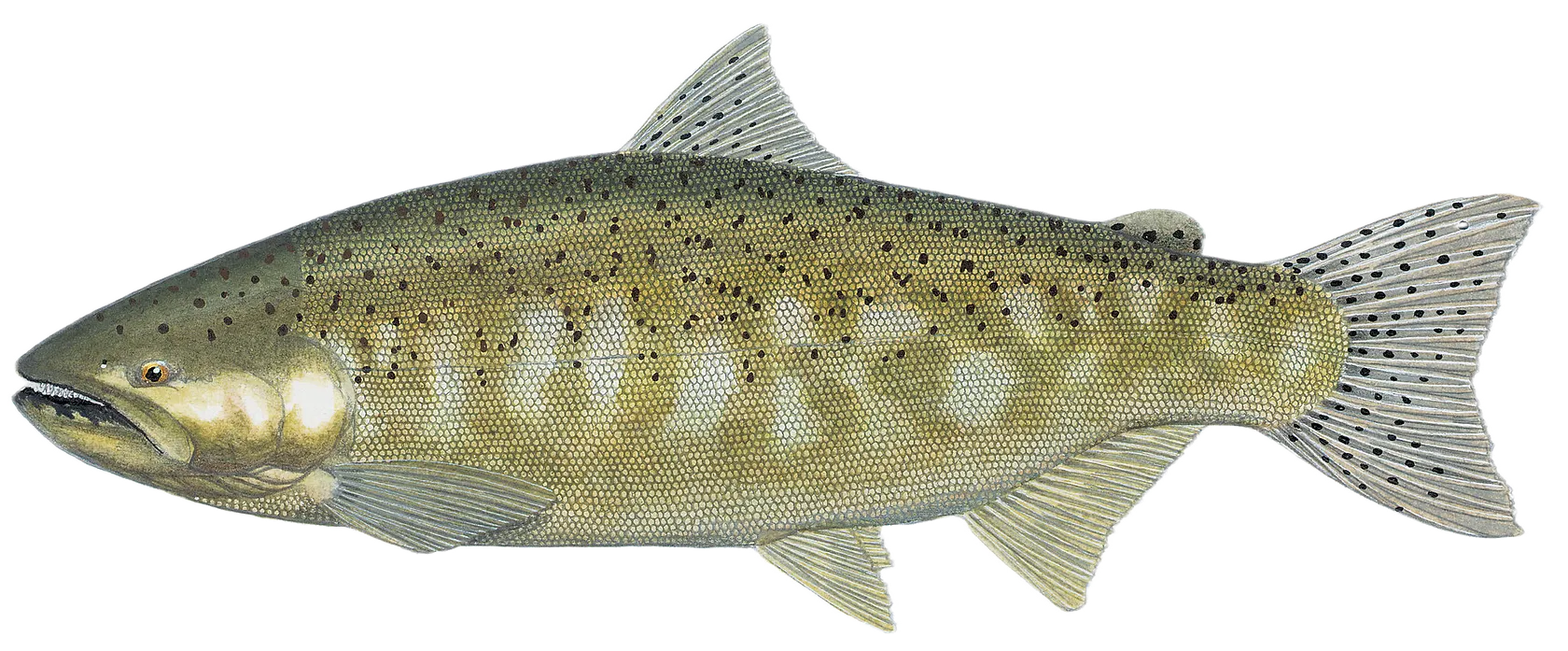
Chinook salmon

Chinook salmon

Regulation boundaryOR Oregon Marine Zone Central Coast Subarea
Bag limit2

The maximum number of individual fish legally harvested per harvester per day. Bag limits are only for properly licensed anglers actively harvesting the species. People who are not actively harvesting or are not properly licensed (if a license is required) may NOT be counted for the purpose of bag limits.

Min size24" (Total Length)

No person shall harvest any individual fish less than the minimum size limit.

Total length means the straight line distance from the most forward point of the head with the mouth closed, to the farthest tip of the tail with the tail compressed or squeezed, while the fish is lying on its side.

Aggregate limit2

The maximum number of individual fish across an aggregate group of species legally harvested per harvester per day.

Restrictions & requirements

OR Using devices to land fish

It is unlawful to use gurdies, winches or reels affixed to a boat to land a fish.

OR Use of drones and radios

It is unlawful to use drones/ radio controlled boats/ or other unmanned vehicles when angling or to aid in angling.

OR Snagging

It is unlawful to snag or attempt to snag gamefish.Additional anti-snagging gear restrictions:Fishing gear restricted to artificial fly, lure, or bait with one single-point hook.Unless otherwise specified, hook must measure 3/4 inch or less at the gap.Hook must be attached to or below any lure or bait.Weight cannot be less than 18 inches above the lure or bait.Consult exceptions to zone regulations for which leader length applies:Leader length: 18-36 inches or less than or equal to 6 feet

OR Unlawful Taking & Retention

It is unlawful to fish for or take and retain any legal species while possessing on board any species not allowed to be taken in that area at that time.

OR Use of More than One Rod or Line

It is unlawful to use more than one rod or line when angling except:with a Two-Rod Validation as a youth anglers (under 12 years of age) when angling outside of three miles from shore for offshore pelagic species, any number of rods or lines are allowed only if no species other than offshore pelagic species have been retained.

OR Ice hole size

Angling through a human-made ice hole larger than 12 inches in diameter or length is unlawful.

OR Use of chum

Taking or attempting to take any fish by chumming, or knowingly angle with the aid of chum is unlawful except when angling for offshore pelagic species outside of three miles from shore if no species other than offshore pelagic species have been retained.

OR Buying or selling fish and fish parts

Buying or selling fish or shellfish, or parts thereof, that were caught or taken for personal use. Except the skeletal remains of ocean food fish may be sold; and eggs from ocean-caught salmon may be sold to a licensed fish or bait dealer.

OR Fish with radio tags

It is unlawful to take a fish with a radio tag (identified by an antenna trailing from its mouth or body) except in the mainstem Columbia River and its tributaries, when consistent with all other applicable laws and regulations.

OR Fishways weirs and fish traps

It is unlawful to trespass on a fishway, weir or fish trap, or angle within 200 feet above and 200 feet below a weir or the entrance/exit of a private or public fishway or fish trap.

OR Transport of live fish and egs

Bringing live fish or live eggs into the state, transporting them overland, or from one waterbody to another without a permit from ODFW is unlawful.

OR Salmon and Steelhead Bobber Rules

When fishing for salmon and steelhead fishing gear restricted to artificial fly, lure, or bait with one single-point hook. Salmon/steelhead bobber angling gear mustinclude a bobber and leader no longer than36 inches. Any weight is to be no more than 36 inchesfrom the hook when suspended vertically. The bobber must suspend the weight, leader, and terminal gear, not allowing it to rest on the river bottom.

OR Bait Restriction

The following may NOT be used as bait:• Live fish. Except live nongame fish maybe used in the ocean, bays and tidewaters when taken from the same waters in which they will be used as bait.• Goldfish. Nor can they be in an angler's possession while angling.• Lamprey.• Live crayfish.• Live leeches. Nor can they be in an angler'spossession while angling.

OR 3 Hook Maximum

No more than three hooks may be used when angling, except herring jigs may be used for marine food fish species.• A double or treble point hook is classified asone hook.• When angling with two rods (whereallowed and with a Two-Rod Validation), the general hook rule applies to each rod.

OR Salmon, Steelhead, Halibut, Sturgeon Hooks

Salmon, Steelhead, Halibut and SturgeonPacific halibut: no more than two hooks may be used.Sturgeon:no more than one single point barbless hook may be used.Ocean salmon: no more than two single point barbless hooks when angling for salmon in the ocean, or when angling for other ocean species with salmon or steelhead onboard.Salmon/Steelhead (except ocean): Single-point hooks larger than 1inch gap and multiple point hooks larger than 9/16 inch gap are prohibited. All weight, if not part of conventional lure, must be attached on the fishing line between the lure and the end of the rod. With hooks larger than 5/8 inch gap or multiple point hook, weight must be attached 18 inches or more above the uppermost hook.

OR Daylight Hours

It is unlawful to angle for or take salmon, shad, steelhead, sturgeon, trout or whitefish except during daylight hours (one hour before sunrise until one hour after sunset). Unless there is an exception for specific waterbodies.

OR Game Fish Unlawful Methods

It is unlawful to take game fish other than those hooked inside the mouth. It is unlawful to: snag, spear, gaff, net, trap, club, shoot or ensnare any freshwater game fish. A hand-held landing net may be used to land a legally hooked fish. A gaff may not be used to land salmon, steelhead or other freshwater game fish in inland or ocean fisheries.

OR Removal of eggs

It is unlawful to remove eggs from any salmon, steelhead or sturgeon without retaining the carcass while in the field.

OR Field dressing of mutilating

It is unlawful to possess game fish in the field that have been dressed or mutilated so that size, species or fin clip cannot be determined. Fish may be dressed when the angler has reached their automobile (or principle means of land transportation) and has finished angling for the day.

OR Marine Allowed Methods

Species may be taken by angling, hand, bow and arrow, spear, gaff hook, snag hook and herring jigs. 

OR Dip Net, Cast Net, Angling, Herring Jigs ONLY

May only be taken by dip net, cast net, angling and herring jigs. 

OR Pelagic Species

Methods described below are only allowed when fishing outside of 3 miles from shore for offshore pelagic species. Only offshore pelagic species may be in possession, and any other species caught must be immediately released while using these methods. Chumming is allowed. Chum may be live, dead, or cut up squid, herring, sardine, anchovy, smelt, or Pacific mackerel. No restriction on the number of rods or lines fished per angler. It is unlawful to remove the fins or tail from a shark, except spiny dogfish, at any time. The fins and tail must remain attached and disposed of with the carcass.

OR Angling with Single Line or Spear

May be taken by angling with a single line, no more than 2 hooks; and by spear.

OR Ocean Salmon Regulations

Ocean salmon regulations are finalized in late-April for the "salmon year" that starts on May 16 and concludes the following April. The season regulations that go into effect March 15 of each year are those that were set in April of the previous year. In April, the Pacific Fishery Management Council and Oregon Fish and Wildlife Commission adopt additional salmon seasons for the new "salmon year" beginning May 16. To check the recreational Salmon quota status, visit the Ocean Salmon Management Program catch index page.‌ Refer to the current Oregon Sport Fishing Regulations for descriptions of special marine management areas including closed areas and additional restrictions. Anglers are advised to consult the following prior to fishing2024 Ocean Salmon Sport Seasons Guide2024 Oregon Sport Fishing Regulations for General (statewide)Marine Zone Regulations

OR Wild vs Hatchery Salmon and Trout

Wild fish: A wild fish is a salmon, steelhead or trout with no fin clips — adipose or other. This term is used for regulation simplification purposes only, and in some cases encompasses unclipped hatchery fish and non-native fish (refer to OAR 635-007- 0501(69) for the legal definition of "wild fish")Hatchery fish: A hatchery fish is defined as a salmon, steelhead or trout from which the adipose fin or other fin has been removed (clipped) leaving a healed scar.

OR Angling Tag in Possession

All anglers need a valid Combined Angling Tag (authorizing harvest of 20 salmon or steelhead per year) in possession to angle for salmon, steelhead, sturgeon and halibut.Harvested adult wild salmon or steelhead must be immediately recorded on the Combined Angling Tag.

Additional information
Within the Stonewall Bank Yelloweye Rockfish Conservation Area salmon angling is restricted to trolling on all depth halibut days. Refer to the current Oregon Sport Fishing Regulations for descriptions of special marine management areas including closed areas and additional restrictions. Ocean salmon regulations are finalized in late-April for the "salmon year" that starts on May 16 and concludes the following April. The season regulations that go into effect March 15 of each year are those that were set in April of the previous year. In April, the Pacific Fishery Management Council and Oregon Fish and Wildlife Commission adopt additional salmon seasons for the new "salmon year" beginning May 16.
Synonyms
Chinook, Oncorhynchus tshawytscha
Location specific information
MARINE ZONE SEASONSFor the following fish, seasons are set after these regulations are established printed. Check regulations before fishing at https://myodfw.com/fishing/marine-zoneLingcod (including green-colored lingcod), Rockfish ("sea bass", "snapper"), Greenling ("sea trout"), Sablefish, Pacific Cod, Cabezon, Skates, Spiny Dogfish, Leopard Shark, Soupfin Shark, Flatfish (flounders, soles, sanddabs, turbots, and halibuts except Pacific halibut)  For the following fish, waters are open all year, 24 hours per day: Surfperch (includes all marine perch species), Herring, Anchovy, Sardine, Topsmelt, Jacksmelt, and true smelts, Offshore Pelagic Species: Includes all tuna and mackerel species, swordfish, billfish, jacks (family Carangidae), opah, dorado, pomfret, and all sharks except leopard shark, spiny dogfish, and soupfin shark, Striped Bass and/or Hybrid Bass, SturgeonWhite shark, basking shark, mega-mouth shark, and oceanic whitetip shark are prohibited and must be immediately released unharmed. SEASONSLingcod (including green- colored lingcod), Rockfish ("sea bass", "snapper"), Greenling ("sea trout"), Sablefish, Pacific Cod, Cabezon, Skates, Spiny Dogfish, Leopard Shark, Soupfin Shark, Flatfish (flounders, soles, sanddabs, turbots, and halibuts except Pacific halibut) Seasons are set after these regulations are established printed. Check regulations before fishing at https://myodfw.com/fishing/marine-zone Surfperch (includes all marine perch species), Herring, Anchovy, Sardine, Topsmelt, Jacksmelt, and true smelts, Offshore Pelagic Species: Includes all tuna and mackerel species, swordfish, billfish, jacks (family Carangidae), opah, dorado, pomfret, and all sharks except leopard shark, spiny dogfish, and soupfin shark, Striped Bass and/or Hybrid Bass, SturgeonWaters open all year, 24 hours per day  Outside (seaward) of the 40-fathom regulatory line and using longleader gear Only species allowed include the following rockfish: yellowtail, widow, canary, blue, deacon, bocaccio, chilipepper, redstripe, greenstriped, and silvergray rockfish. For a 12 fish bag limit to apply, fishing must occur outside of the 40-fathom regulatory line & with longleader gear. No other rockfish or lingcod may be kept. For more info on what can be combined on the same trip, see myodfw.com/sport-bottomfish-seasons Anglers may keep one general marine fish daily bag limit of up to 5 fish on a bottomfish trip and do a separate offshore longleader trip on the same day, but fish must be offloaded in between trips and may total no more than 12 general marine species per day. Offshore longleader gear fishery trips cannot be combined with traditional bottomfish trips. Offshore longleader gear fishery trips can be combined with other non-bottomfish trip types (e.g., tuna or salmon), as long as the multi-species rule is followed, as well as any and all specific gear rules. Anglers are reminded that once salmon are on board, anglers are restricted to no more than 2 single point barbless hooks at all times when angling for salmon in the ocean or when angling for other species if a salmon has already been retained. The multi-species rule prohibits fishing for, or taking and retaining any species of salmon, Pacific halibut or marine fish while possessing on board any species not allowed to be taken in the area at that time. Note: if an angler retains more than the general marine fish bag limit of rockfish while participating in the longleader gear fishery, no other fishing (i.e., salmon) may occur inside (shoreward) of the 40-fathom regulatory line on that same trip.
License Icon
Local laws and licenses

Oregon fishing license

Get license

Cities nearby

Oceanside

13.8 miles away

Netarts

13.8 miles away

Neskowin

15.5 miles away

Beaver

16.2 miles away

Pleasant Valley

18.0 miles away

Bay City

19.6 miles away

Fairview

20.3 miles away

Rose Lodge

23.8 miles away

Rockaway Beach

23.8 miles away

Lincoln City

24.1 miles away

Barnesdale

27.6 miles away

Grand Ronde

30.5 miles away

Neahkahnie

31.1 miles away

Fort Hill

33.3 miles away

Sheridan

39.6 miles away

Cannon Beach

41.1 miles away

Cherry Grove

45.0 miles away

Yamhill

47.1 miles away

McMinnville

47.2 miles away

Amity

48.1 miles away

Gaston

49.7 miles away

Gearhart

51.1 miles away

Forest Grove

52.7 miles away

Banks

54.9 miles away

Anything missing or inaccurate?

Suggest changes to improve what we show.

Suggest changes

FAQ about Miller Reservoir fishing

📍 Where is Miller Reservoir located?
Miller Reservoir is a water located in Coos County, Oregon, United States. Its coordinates are:
45°18′29.5″N 124°09′10.8″W
.
🎣 Where on Miller Reservoir is it best to fish?
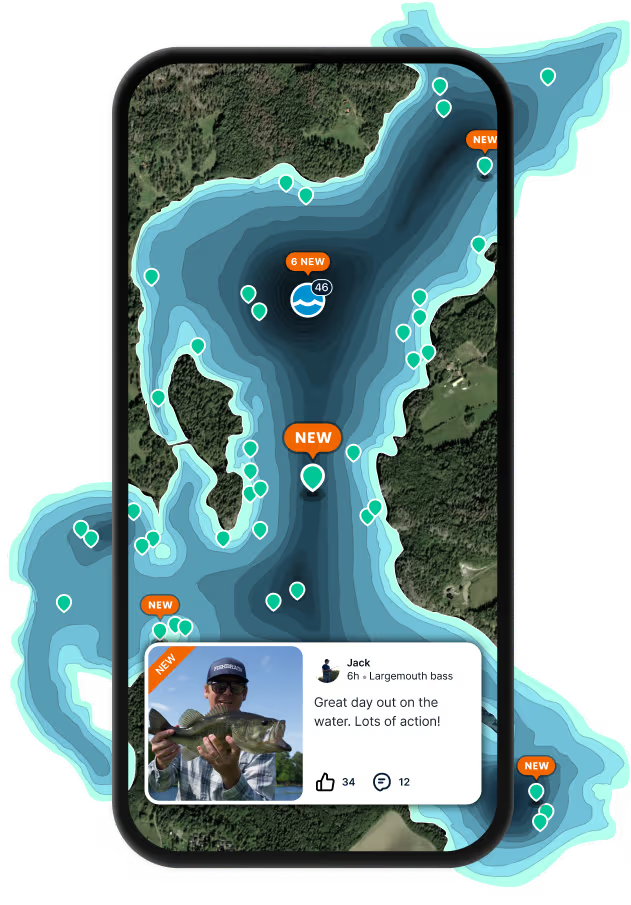
Find the best fishing spots on Miller Reservoir by looking at where other anglers have caught fish. This can easily be done in the where it is also possible to see big fish potential and how good fishing is right now along with Garmin® depth maps.
🐟 What species are in Miller Reservoir?
The most common species in Miller Reservoir are:
  • Lingcod - 3 members reported to have caught this fish
  • Albacore - 1 members reported to have caught this fish
  • Chinook salmon - 1 members reported to have caught this fish
📢 What are the latest Miller Reservoir fishing reports?
The latest Miller Reservoir fishing reports are:
🪪 Do I need a fishing license to fish at Miller Reservoir?

Fishing in Oregon requires a valid state fishing license for anglers. Licenses include resident and non-resident, annual, short-term, and combination permits, available online or at licensed vendors.

In Oregon, no fishing license is required for anglers under 12. Residents 70 and older qualify for a discounted license. A few other exceptions worth knowing:

  • Free fishing days — most states designate 1–2 weekends a year where anyone can fish without a license

  • Tribal waters — tribal members fishing on tribal land operate under separate tribal regulations

  • Private ponds — landowners fishing their own water typically don't need a license

Non-residents usually pay more for a license than residents. Some species also require an extra stamp or endorsement on top of your base license.

Get license
App Section
Download Fishbrain and fish smarter
Unlimited access to the best fishing spot finder in the game. Get all the fishing intel you need to start catching more, and bigger, fish.

Free trial available

Loading...
Loading...
Loading...
Loading...