How to fight big fish: Lakes and ponds
Big fish fight back. Learn how to keep them out of snags, turn them on a run and land them with expert tips for fighting big fish in lakes and ponds.
Share this article
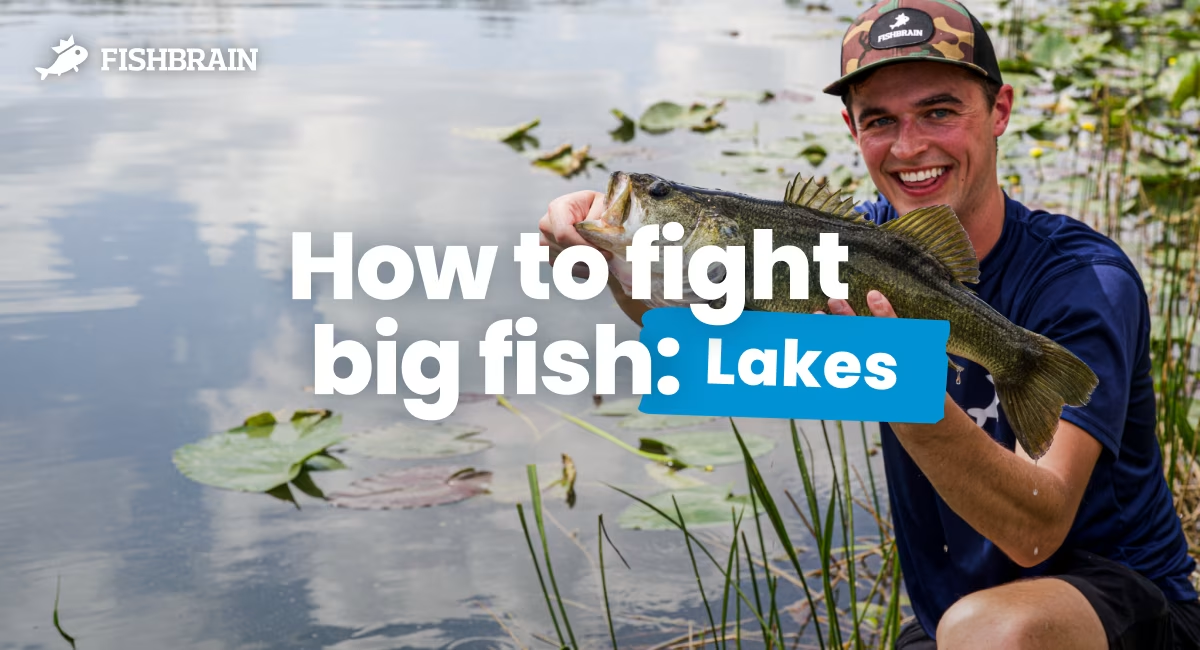
Anyone can fight a bluegill, crappie or even a small bass. The fundamentals stay the same: keep your line tight, keep your rod tip high, pull up and reel down. But what happens when you hook into something that can fight back? What do you do when that trophy heads straight for a snag? What do you do when you’ve got a true lake monster on the line and losing it isn’t an option?
Let’s get into how to fight a big fish in a lake or pond, from the basics to the gear you’ll want and how to handle specific scenarios.
Basics of fighting fish Being prepared starts with knowing whether big fish live where you’re fishing. If they do, set your drag properly before you cast. Set it, test it and tighten it if you need to. A big fish shouldn’t be able to run wild on a loose drag when you set the hook.
Next, keep your rod tip high and bent. A bent rod absorbs the force of sudden runs and headshakes. When your rod is straight, that force goes straight to the hook and the knot. That raises the odds of a broken knot or a thrown hook.
When a big fish decides to run, let it take line. Stop reeling, keep your rod bent and let the drag do its job.
Lift up and reel down. Lift the rod smoothly to pull the fish toward you, then reel as you lower it. Don’t crank against a fish that’s taking line and don't use jerky motions. Make your lift up nice and smooth, pull the fish toward you, then reel up the slack. Keep steady pressure. Slack line is how hooks fall out, especially when a fish jumps or swims toward you. Point the rod down when a fish jumps to keep it from throwing the hook.
Let the fish run. When it takes off, let the drag do the work. Don’t tighten the drag mid-fight unless you’re about to lose the fish to a snag.
Watch for the second wind. Big fish often make one last hard run when they see a boat, a net, or an angler. Be ready to let it run one more time.
The gear
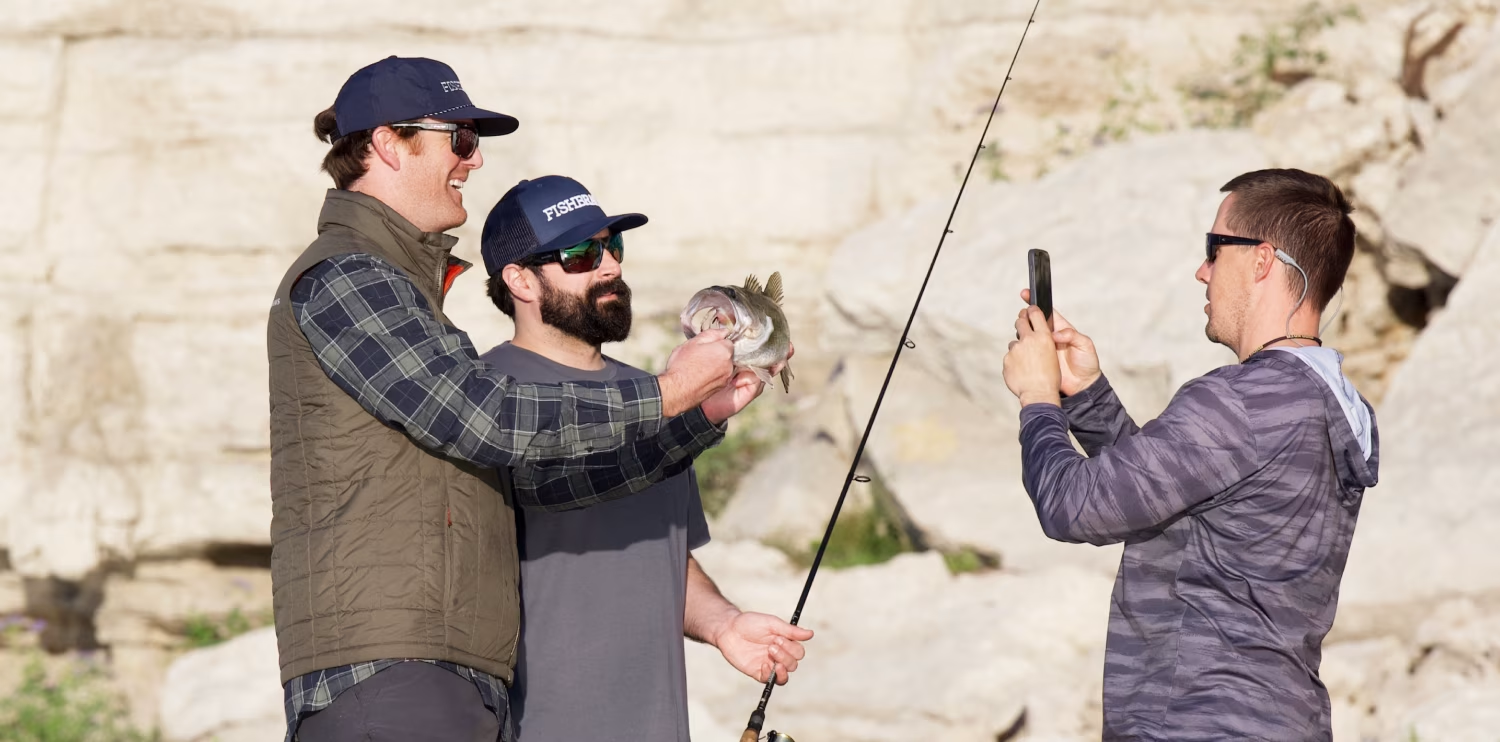
Match the rod to the fish. Medium heavy to heavy power and a fast action should work for bass, pike, lake trout and muskie. The heavy power gives you the leverage to turn a fish’s head and the softer tip helps keep hooks from tearing out.
Pick a reel with a smooth drag. A drag that sticks or stutters is going to snap your line as soon as you try and put the brakes on a fish mid-run. Make sure the reel also holds enough line for long runs.
Choose the right line for the job.
Braid: no stretch and great sensitivity. It cuts through weeds, so it’s ideal around cover.
Fluorocarbon: low visibility and abrasion resistance. A good leader or main line in clear water.
Monofilament: its stretch works as a shock absorber. Forgiving with treble hooks and topwater.
Tie strong knots and check them. Retie after landing a big fish, or any time your line feels rough. The Palomar and FG knots are reliable choices.
Use sharp, strong hooks. If you’re targeting big fish, upgrade to heavier trebles and stronger split rings.
Bring the right landing tools: a large rubber mesh net, long nose pliers, jaw spreaders for pike and cutters for deep hooks.
Open water
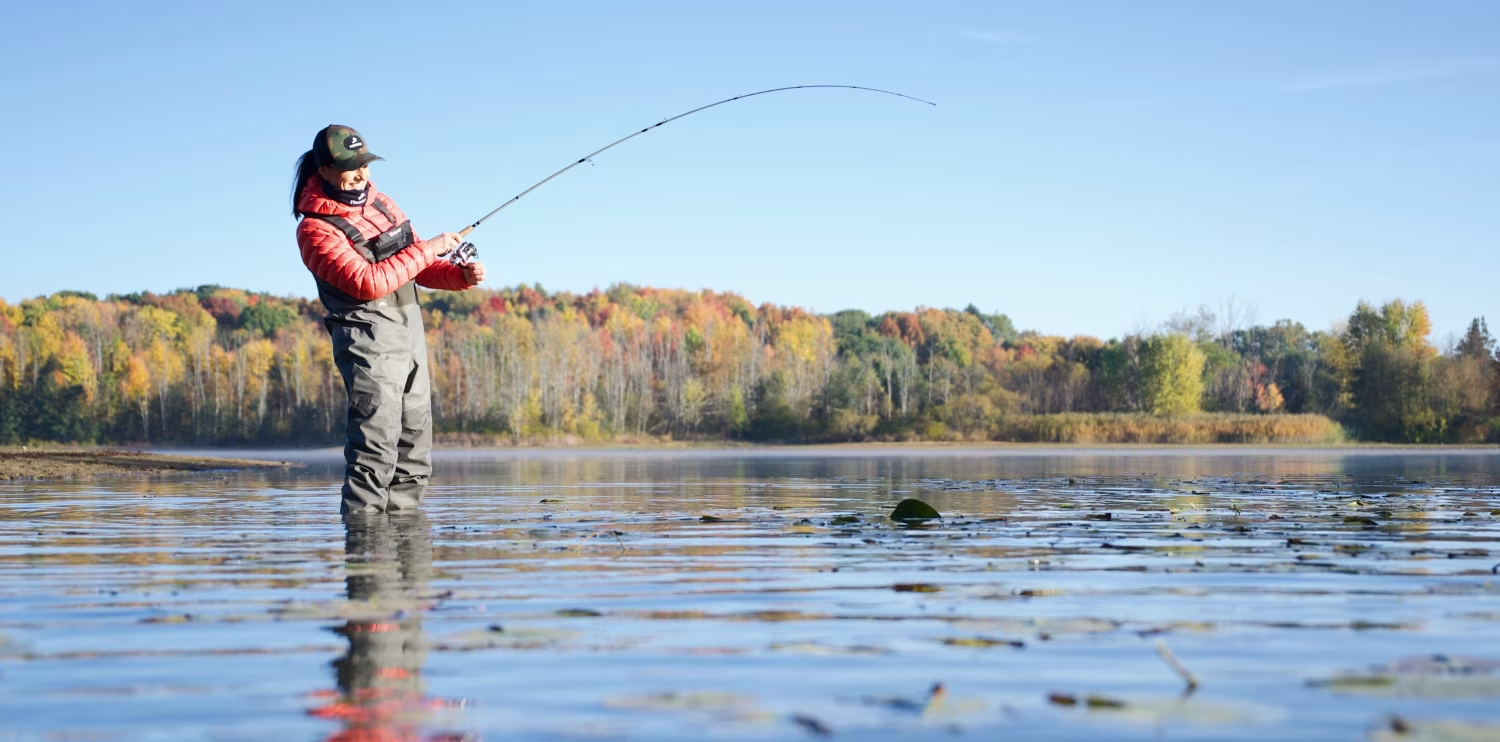
Give it room. In open water there’s little to cut you off, so a lighter drag and patience will win. Let the fish tire itself out.
Use side pressure. Pull the rod low and to the side, opposite the direction the fish is swimming. This turns its head and throws it off balance faster than pulling straight up.
Use the boat. If a fish strips too much line, follow it with the trolling motor to get line back and a better angle.
Watch the line angle. If the line rises fast, the fish is about to jump or surface. Reel to keep tension and lower your rod tip.
Be careful near the boat. This is where most fish are lost. If the fish is still green (fresh), loosen the drag slightly. Keep it away from the motor, trolling motor and anchor ropes, then lead it to the net.
Bring deep fish up slowly. With deep fish like lake trout or walleye, a steady pace helps prevent barotrauma and keeps hooks from pulling.
Structure
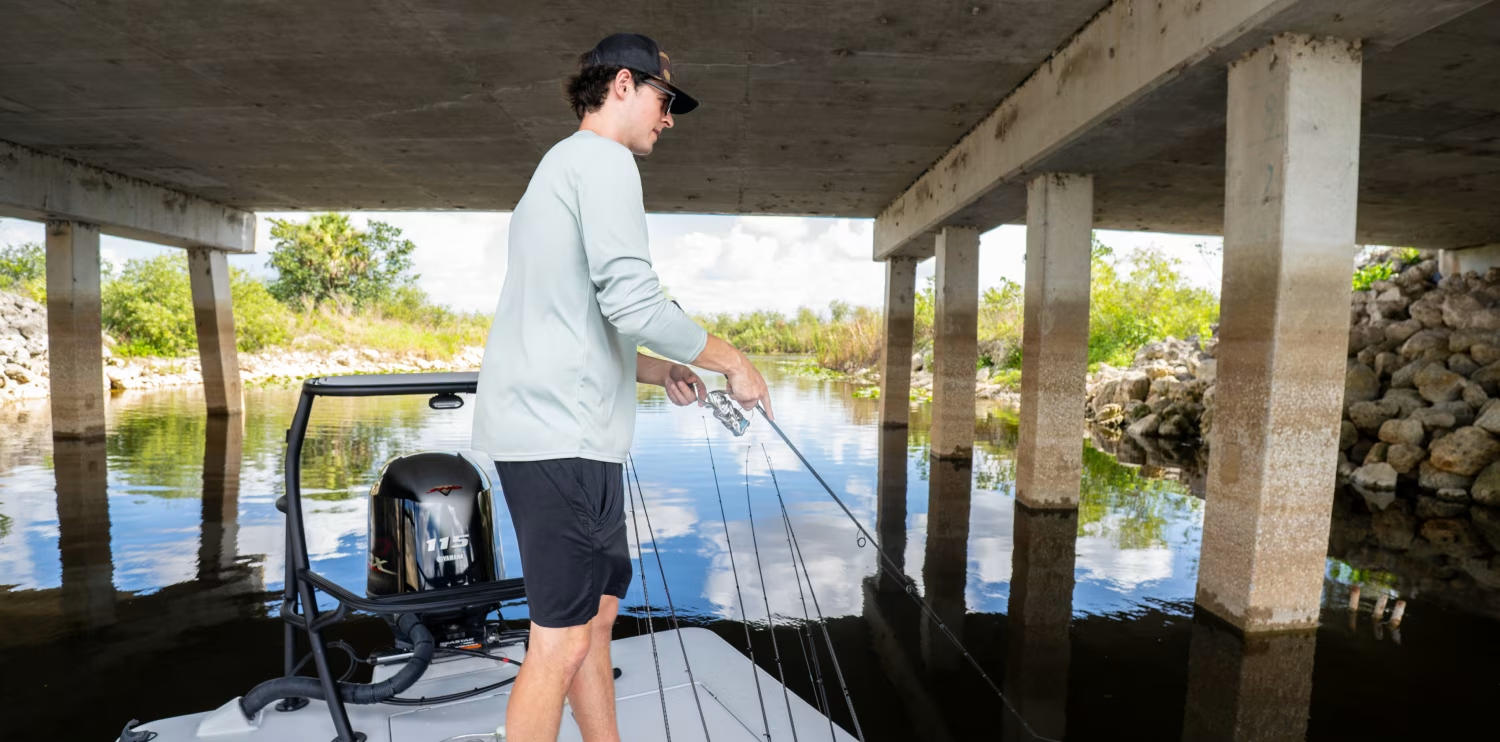
You need to turn the fish in the first few seconds of its first run, when there’s structure nearby.. A big fish near snags, timber, docks, or rocks will head straight for that cover, putting your line in danger. Set the hook hard and turn its head right away.
Fish heavier gear and tighten your drag before you cast near structure. You can’t let it run here. Braid in the 40 to 65 lb range is common for heavy cover.
Pull it out, then fight it. Get the fish away from structure first, then try to play it out in open water.
Hold the rod high to keep the fish out of cover. A high rod angle lifts its head, keeps it from diving under logs and it uses the rod’s flexibility to keep the hook in place.
If it buries itself in weeds, keep steady pressure. Don’t yank. Slow, constant pressure often pulls the fish and the weeds out together, and braid can slice through the stems.
If it wraps around something, give it slack. Ease off for a few seconds and the fish may swim back out on its own.
Check your line often. Rocks, mussels and timber nick line fast. Run your fingers over the last few feet and retie if you feel any rough spots.
There’s a lot to consider when you’ve got your first lunker on the end of your line and it's hard to remember it all when your heart is racing and your drag is screaming. But if you can keep a cool head, monitor your surroundings and fight your fish strategically, you’ll be netting it in no time.
Don’t lose out on the fish of a lifetime. Fish smarter and harder today and always with Fishbrain.
If you haven't tried the No. 1 fishing app worldwide, check out Fishbrain to see all the fish data, fishing spots, weather conditions and much more you've been missing.

Download the Fishbrain app and access the best fishing spots in your area
Related blog posts
Get our best fall bass fishing tips, from finding baitfish to picking lures that work when the water cools. Fish smarter this fall.
Why do so many captains ban bananas from the boat? Dig into the history behind fishing’s strangest superstition, from sunken ships to hidden spiders.
If fish keep trailing your lure without ever committing, you're not alone, and it's rarely bad luck. This guide breaks down why fish follow instead of striking, plus the retrieve changes, lure swaps and hookset tricks that turn hesitant followers into solid bites. You'll also learn how to read what those follows are telling you about depth, mood and presentation, so you can adjust on the water instead of guessing.